
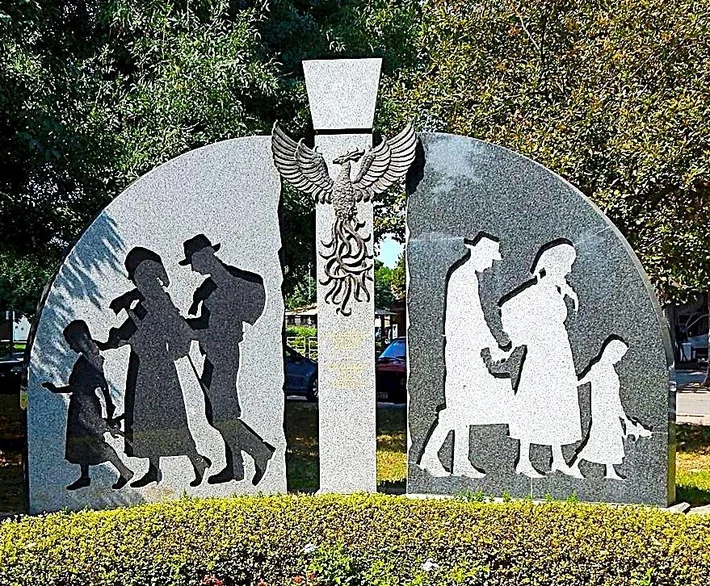
Since the 18th century, the history of the Danube Swabians has been inextricably linked to migratory movements that mark both identity-defining continuities and profound societal ruptures. While the settlements of the 18th century laid the foundation for a specific form of local coexistence, the 20th century brought about a radical transformation: the instrumentalization of the minority during the interwar period, alongside flight, deportation to forced labour and expulsion from their "homeland", constituted collective traumas.
These historical caesuras continue to resonate into the present, shaping contemporary memory culture on multiple levels. The transmission of these experiences within the community—spanning from the eyewitness generation to today’s youth—reveals complex mechanisms of identity preservation, as well as linguistic and cultural loss. In this context, the public processing of these events, the erection of memorials, and the representation of the minority's history within current political discourse serve as expressions of a continuously evolving process of coming to terms with the past.
However, the contemporary situation of the minority is characterized by new forms of mobility. The labour migration of Hungarian-Germans to the German-speaking world, as well as migration from Germany into the German settlement areas of Hungary, create transnational spaces where questions of belonging and minority identity are redefined. The tension between historical migration experiences and present-day, often politically and economically motivated mobility forms the core of a dynamic minority existence in modern Europe. Linking these historical traumas with current migratory processes enables a holistic understanding of these phenomena as a continuum of constant adaptation and transformation